
How Many Yorkie Types Are There? The Truth About Yorkshire Terrier Varieties
Separating legitimate breed variations from marketing gimmicks: What buyers need to know about "teacup," "parti," and other Yorkie labels
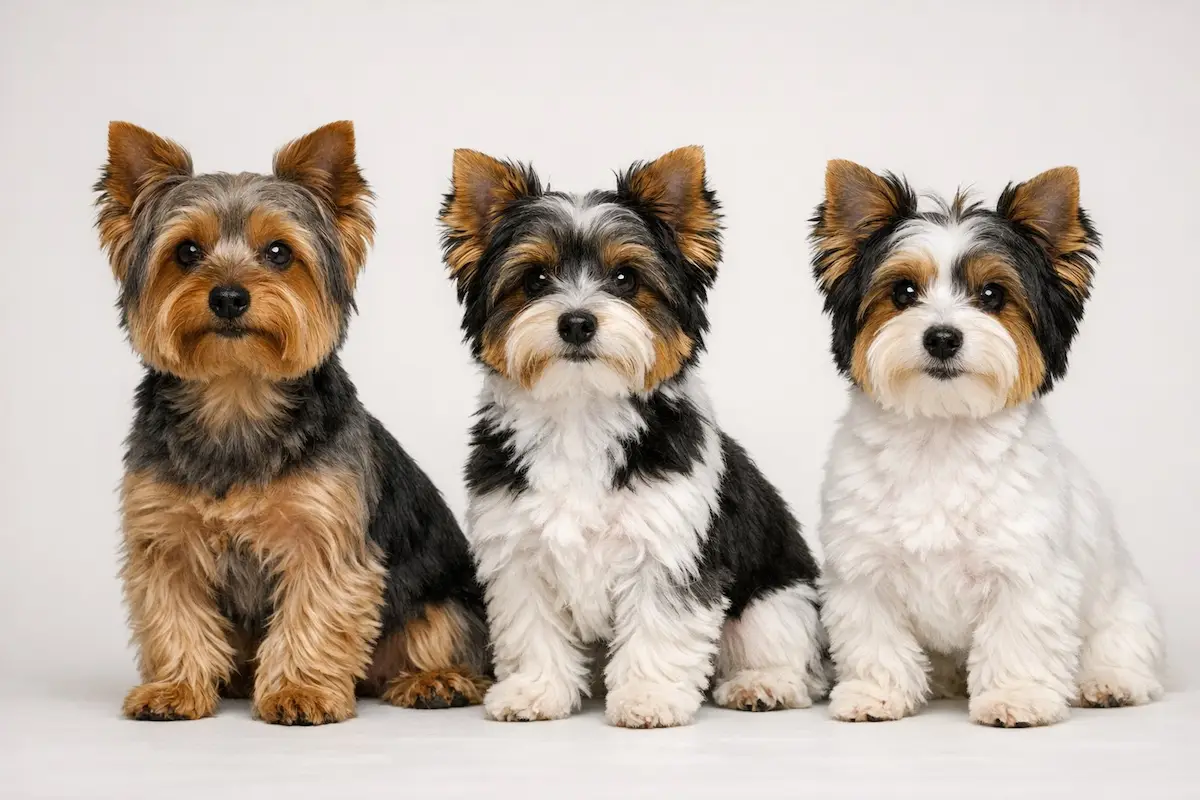
Quick Answer
There is ONE official type of Yorkshire Terrier recognized by the AKC: the standard Yorkshire Terrier (4-7 lbs, blue and tan coat). Terms like "teacup," "toy," "mini," and "micro" are marketing gimmicks—not legitimate types. These describe undersized Yorkies bred unethically for profit, often with serious health problems.
Parti Yorkies are the same breed with a color variation (tri-color instead of blue/tan). Biewer Terriers are a separate AKC-recognized breed (since 2021) that originated from Yorkies but are genetically distinct.
The Official Truth: Only ONE Type
✓ Standard Yorkshire Terrier (The ONLY Official Type)
AKC Breed Standard:
- Weight: 4-7 pounds (no minimum specified)
- Height: 7-8 inches at shoulder
- Coat: Long, silky, straight
- Color: Steel blue body, tan head/chest/legs
- Temperament: Bold, confident, spirited
Key Facts:
- ✓ AKC recognized since 1886
- ✓ 140+ years of breed history
- ✓ Toy Group classification
- ✓ Originally bred for ratting
- ✓ One of America's most popular breeds
The AKC does NOT recognize different "types" of Yorkshire Terriers. Any breeder claiming to sell "rare" or "special" types is using marketing language to justify higher prices or excuse poor breeding practices.
⚠️ What About Size Variations?
It's normal for Yorkshire Terriers to vary in size within the 4-7 lb range. A 4 lb Yorkie and a 7 lb Yorkie are both standard Yorkshire Terriers—there's no separate classification. Size variation happens in all dog breeds due to genetics.
Responsible breeders aim for the middle of the breed standard (5-6 lbs) for optimal health. Dogs under 4 lbs or over 8 lbs can have health issues or may indicate mixed breeding in the bloodline.
Marketing Myths: Fake "Types" Explained
❌ "Teacup" Yorkie
MARKETING GIMMICKWhat it really means: An undersized Yorkshire Terrier (under 4 lbs) - NOT a separate breed or type. Often the result of breeding runts, premature puppies, or deliberately starving dogs to stunt growth.
Serious Health Problems:
- • Hypoglycemia (life-threatening low blood sugar)
- • Liver shunts (70% higher rate)
- • Seizures (neurological issues)
- • Bone fractures (fragile skeleton)
- • Heart defects (underdeveloped organs)
- • Dental problems (extreme crowding)
- • Hydrocephalus (water on brain)
- • Shortened lifespan (7-9 years vs 12-15)
Why Breeders Use This Term:
"Teacup" sounds cute and exclusive, allowing unethical breeders to charge premium prices ($3,000-10,000) for dogs with serious health defects. Responsible breeders never use this term and actively avoid producing undersized puppies.
🚨 Major kennel clubs (AKC, UKC, CKC) do NOT recognize "teacup" as a legitimate classification.
❌ Other Fake Size Classifications
"Toy" Yorkie
Why it's misleading: ALL Yorkshire Terriers are already in the "Toy Group" by AKC classification. Using "toy" as a size descriptor is redundant and suggests a smaller-than-standard dog (which is unhealthy).
"Miniature" or "Mini" Yorkie
Why it's misleading: Yorkies are already one of the smallest dog breeds. "Mini" implies smaller than standard (under 4 lbs), which is associated with health problems. Legitimate breeders don't use this term.
"Micro" or "Pocket" Yorkie
Why it's misleading: Extremely undersized dogs (2-3 lbs) with severe health issues. These terms are used by puppy mills and backyard breeders to exploit buyers wanting "the smallest dog." Often die young or require constant veterinary care.
"Standard" vs "Large" Yorkie
Why it's misleading: Some breeders try to sell 8-10 lb dogs as "rare large Yorkies" to justify poor breeding. The breed standard is 4-7 lbs. Dogs consistently over 7 lbs may indicate mixed breeding or poor genetics.
Legitimate Variations: What IS Real
✓ Parti Yorkie (Color Variation)
SAME BREEDWhat it is: A Yorkshire Terrier with a tri-color coat (white, black/blue, and tan/gold) instead of the traditional blue and tan. This is a color variation, not a different type or breed.
Key Facts:
- ✓ Same size (4-7 lbs), temperament, and health as standard Yorkies
- ✓ Caused by a recessive gene (both parents must carry it)
- ✓ Not eligible for AKC show competitions (color disqualification)
- ✓ Can be registered with AKC but marked as "pet quality"
- ✓ Often mistaken for Biewer Terriers (but they're Yorkies)
History:
Parti-colored Yorkies occasionally appeared in litters throughout breed history but were considered "incorrect" and removed from breeding programs. In recent decades, some breeders have intentionally bred for this color pattern, creating controversy in the Yorkie community. The coloring is natural and genetic—not a health defect.
✓ Biewer Terrier (Different Breed)
SEPARATE BREEDWhat it is: A distinct, AKC-recognized breed (since 2021) that originated from Yorkshire Terriers in Germany in 1984. While they look similar, Biewers are genetically different from Yorkies.
How They're Different:
- ✓ Genetically distinct (confirmed by DNA testing)
- ✓ Tri-color coat is breed standard (not a defect)
- ✓ Slightly calmer, friendlier temperament
- ✓ Full plumed tail (never docked)
- ✓ Lower rates of genetic health issues
- ✓ Can compete in AKC shows
- ✓ Separate breed club and standards
- ✓ 40 years of selective breeding
Important: Biewer Terriers are NOT "fancy Parti Yorkies" or a "marketing scam." They're a legitimate, AKC-recognized breed with documented genetic differences. However, they're often confused with Parti Yorkies due to similar tri-color appearance.
Quick Reference: Real vs Fake Types
| Term | Status | AKC Recognized | Reality |
|---|---|---|---|
| Yorkshire Terrier | REAL | ✓ Yes (1886) | The one and only official type |
| Teacup Yorkie | FAKE | ✗ No | Undersized dog with health problems |
| Toy Yorkie | FAKE | ✗ No | Marketing term (all Yorkies are "toy") |
| Mini/Micro Yorkie | FAKE | ✗ No | Severely undersized, serious health issues |
| Parti Yorkie | REAL | ✓ Yes (pet only) | Color variation, same breed |
| Biewer Terrier | REAL | ✓ Yes (2021) | Separate breed, different genetics |
| Designer "Yorkie Mix" | MIXED | ✗ No | Not a Yorkie (Yorkie + another breed) |
🚩 Red Flags When Buying a Yorkie
Avoid Breeders Who Use These Terms:
"Teacup guaranteed!"
Promising a specific tiny size is unethical. Reputable breeders cannot guarantee adult weight for puppies under 12 weeks.
"Rare micro/pocket size!"
Extremely undersized dogs are not "rare" or "special"—they're unhealthy. This language targets uninformed buyers.
"Imperial/Royal Yorkie"
Completely made-up classifications. No kennel club recognizes these terms. Pure marketing nonsense.
"Multiple types available!"
Legitimate breeders focus on ONE breed standard, not producing various "types" or sizes for marketing purposes.
"Available immediately / always have puppies"
Puppy mills and commercial breeders. Responsible breeders have waitlists and limited litters per year.
💡 If a breeder uses ANY of these terms, walk away immediately.
These are hallmarks of puppy mills, backyard breeders, and scammers. Responsible, ethical breeders follow AKC breed standards and don't invent fake "types" to inflate prices.
✓ What to Look For in a Responsible Breeder
Green Flags:
- ✓Uses only "Yorkshire Terrier" (no size modifiers)
- ✓Health tests parents (OFA patellas, CERF eyes, BAER hearing)
- ✓Produces 1-3 litters per year maximum
- ✓Has a waitlist (not "always available")
- ✓Interviews buyers extensively
- ✓Provides health guarantee and contract
- ✓Shows you where puppies are raised (in-home)
- ✓Belongs to Yorkshire Terrier Club of America
Questions They Should Ask You:
- • Do you have a secure yard or live in an apartment?
- • What's your experience with small/toy breeds?
- • Who will be the primary caregiver?
- • Are you prepared for grooming costs ($1,000-2,000/year)?
- • What happens to the dog if your situation changes?
- • Will this be a pet or are you interested in showing?
- • Why do you specifically want a Yorkshire Terrier?
A breeder who doesn't ask questions is only interested in profit, not dog welfare.
Frequently Asked Questions
Is "teacup" a real size classification for Yorkies?
No. "Teacup" is a marketing term with no recognition from the AKC or any major kennel club. It describes undersized Yorkshire Terriers (under 4 lbs) that often have serious health problems. Reputable breeders never use this term and actively breed away from producing tiny dogs.
Are Parti Yorkies a different breed from regular Yorkies?
No. Parti Yorkies are purebred Yorkshire Terriers with a tri-color coat pattern instead of the traditional blue and tan. They're the same breed—just a color variation. They have the same temperament, size (4-7 lbs), and health profile as standard Yorkies. They can be AKC registered but aren't eligible for conformation shows due to color.
What's the difference between a Parti Yorkie and a Biewer Terrier?
Parti Yorkies are Yorkshire Terriers with tri-color coats. Biewer Terriers are a genetically distinct, separate AKC-recognized breed (since 2021) that originated from Yorkies. While they look similar, Biewers have documented genetic differences, slightly calmer temperaments, and lower rates of health issues. Biewers can compete in AKC shows; Parti Yorkies cannot.
Can you breed "teacup" Yorkies to get smaller puppies?
Breeding undersized dogs to produce even smaller puppies is unethical and extremely harmful. It concentrates genetic defects, increases rates of liver shunts, seizures, and bone problems, and dramatically shortens lifespans. Ethical breeders aim for the middle of the breed standard (5-6 lbs) where dogs are healthiest. Deliberately breeding for extreme small size is condemned by veterinary organizations.
Why do "teacup" Yorkies cost more if they have health problems?
It's pure marketing exploitation. Unethical breeders know buyers find tiny dogs "cute" and are willing to pay premium prices ($3,000-10,000) without understanding the health consequences. The high price doesn't reflect quality—it reflects demand from uninformed buyers. Responsible breeders charge less ($1,200-3,000) for healthier, properly-sized dogs.
Are there different "bloodlines" or "types" of Yorkshire Terriers?
There are different bloodlines (family trees) within the breed, but not different "types." Some bloodlines may produce slightly smaller or larger dogs, different coat textures, or varied temperaments—but all are still standard Yorkshire Terriers. Claims of "rare bloodlines" or "special types" are usually marketing gimmicks to justify inflated prices.
Find Responsible Yorkshire Terrier Breeders
Connect with ethical breeders who prioritize health over size gimmicks, follow AKC breed standards, and provide lifetime support.
Browse Responsible Breeders →Disclaimer: This article provides educational information about Yorkshire Terrier classifications and breeding practices. Always research breeders thoroughly, meet puppies in person, and verify health testing before purchasing. Avoid puppy mills, pet stores, and online sellers who ship puppies sight-unseen. Support responsible breeding practices that prioritize health and temperament over appearance or size.