
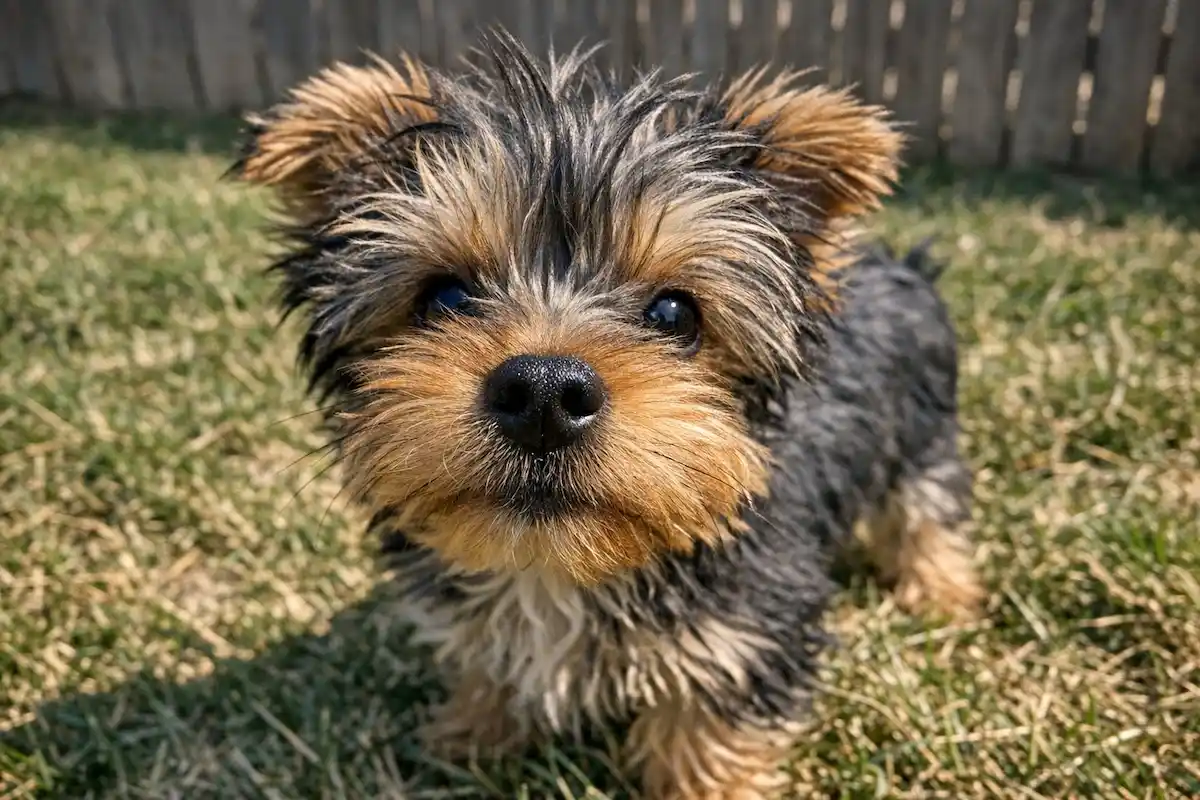
Why Yorkshire Terriers Are Hard to Potty Train
Yorkies consistently rank among the most difficult breeds to housetrain. This isn't owner failure - it's biology and temperament:
Physical Challenges:
- • Tiny bladder: Can only hold 1-2 hours as puppies (vs 4-6 hours for larger breeds)
- • Fast metabolism: Food/water processes quickly = frequent elimination
- • Small size: Accidents less noticeable, easier to hide
- • Weather sensitivity: Cold/rain/snow uncomfortable for tiny dogs
- • Short legs: Deep snow impassable, wet grass unpleasant
Behavioral Challenges:
- • Stubborn terrier personality: Independent, willful thinkers
- • Easily distracted: Forgets to potty when excited
- • Submissive urination: Pees when scared/excited (separate issue)
- • Territorial marking: Males especially (neutering helps)
- • Preference for indoors: Small enough to never "need" to go outside
Realistic Expectations
- 4-6 months for basic reliability: Most accidents stop
- 6-12 months for 100% reliability: Zero accidents
- Setbacks are normal: Weather changes, stress, illness cause regression
- Some never fully train: 10-15% of Yorkies always have occasional accidents
The Crate Training Method (Most Effective)
Why Crate Training Works Best for Yorkies
Dogs instinctively avoid soiling their sleeping area. A properly sized crate (just big enough to stand, turn, lie down) prevents accidents because Yorkie won't want to pee where they sleep.
Success rate: 80-90% within 4-6 months when done correctly.
Step-by-Step Crate Training
Make Crate Positive
- • Feed all meals in crate (door open)
- • Toss treats in randomly throughout day
- • Never force in - lure with treats
- • Start closing door for 5 minutes while you're present
- • Gradually increase to 30 minutes
Scheduled Bathroom Breaks
Puppy Schedule (under 6 months):
- • First thing in morning (immediately out of crate)
- • After every meal (within 15 minutes)
- • After every play session
- • After drinking water
- • Every 2 hours during day
- • Before bed (last thing at night)
- • Middle of night if needed (puppies can't hold 8 hours)
Reward Success Immediately
- • Take to same spot every time (scent cue)
- • Use command: "Go potty" or "Do your business"
- • Wait silently (no playing - this is business)
- • INSTANT reward when they go: Treat + enthusiastic praise within 3 seconds
- • Then allow play/free time as reward
Extend Time Between Breaks
- • Increase to 3 hours between breaks
- • Allow supervised free time in one room
- • Watch for sniffing, circling, whining (signals)
- • Interrupt accidents, rush outside, reward if they finish there
- • Gradually expand to whole house
Crate Size & Setup
- Size: 24" crate for adult Yorkies (4-7 lbs)
- Divider: Use divider for puppies (only room to turn around)
- Bedding: Washable blanket or crate pad
- Location: Bedroom at night (hear if they need out), main room during day
- No water in crate: Increases accidents
Pee Pad Training (Alternative Method)
⚠️ Pee Pads Create Confusion
Pee pads teach dog it's acceptable to potty indoors. Later transitioning to outdoor-only is difficult because you've reinforced indoor pottying. However, pee pads work for:
- • Apartment living (high floors, limited outdoor access)
- • Owners with mobility issues
- • Extreme climates (very cold/hot)
- • Senior dogs with incontinence
How to Pee Pad Train
- Designate pad area: One consistent spot (bathroom, laundry room)
- Take to pad on schedule: Same as crate training (every 2 hours, after meals, etc.)
- Use attractant spray: Pee pad training spray draws them to spot
- Reward pad use: Treat immediately when they go on pad
- Gradually reduce pads: Start with 4-6 pads, reduce to 1 over weeks
- Clean accidents thoroughly: Enzyme cleaner eliminates scent
Transitioning from Pads to Outdoor
If you want to eventually go outdoor-only:
- Move pad closer to door over 2 weeks
- Put pad outside door
- Gradually reduce pad size
- Remove pad, take to grass on schedule
- Expect 2-4 weeks of confusion/accidents
Bell Training (For Adult Yorkies)
Teach your Yorkie to ring bells when they need to go out:
Step 1: Introduce Bells
Hang bells on door handle. Every time you take dog out, ring bells yourself first. Say "Outside!"
Step 2: Dog Touches Bells
Hold treat near bells. When dog touches bells with nose/paw, treat + go outside immediately. Repeat 10x daily.
Step 3: Association
After 1-2 weeks, dog learns: ring bells = go outside. Some Yorkies pick this up in 3 days, others take 4 weeks.
Warning: Some Yorkies abuse bell system - ring constantly to go play. Only let out for potty, not play.
Troubleshooting Common Problems
Problem: Still Having Accidents After 3 Months
Possible causes:
- Schedule too infrequent: Take out MORE often (every 90 minutes for puppies)
- Inconsistent rewards: MUST reward every single success
- Too much freedom too early: Back to crate training, smaller supervised areas
- Medical issue: UTI, bladder stones, diabetes (vet checkup needed)
- Insufficient supervision: Can't correct what you don't see
Problem: Perfect During Day, Accidents at Night
Solutions:
- Remove water 2 hours before bedtime
- Last potty break immediately before bed (11pm or later)
- Set alarm for middle-of-night break (3-4am for young puppies)
- Crate in bedroom so you hear whining
- Puppies under 4 months physically can't hold all night
Problem: Goes Outside Then Comes In and Pees
This is common:
- Cause: Got distracted outside (sniffing, sights, sounds)
- Solution: Stay outside 10-15 minutes until they go
- Boring potty spot: No distractions - just grass/concrete
- After they go: THEN allow sniffing/exploring as reward
Problem: Pees When Excited/Scared (Submissive Urination)
This is NOT a Training Issue
Submissive urination is involuntary - dog cannot control it. Happens when: greeting people, being scolded, sudden loud noises, startled. Most common in puppies, usually outgrow by 1 year.
Management:
- • Greet calmly (no excited high voice)
- • Ignore for first 5 minutes when arriving home
- • No punishment ever (makes it worse)
- • Let them calm before petting
- • Clean without reaction
What NOT to Do (Critical Mistakes)
❌ Never Punish Accidents
Rubbing nose in it, yelling, hitting DOES NOT WORK. Dog doesn't understand punishment after the fact (even 30 seconds later). Only teaches fear of you, not to go outside. Clean silently with enzyme cleaner.
❌ Don't Use Puppy Pads Long-Term
If goal is outdoor pottying, pads confuse the issue. Use crate method instead. Pads should be temporary (bad weather days) or permanent decision (apartment living).
❌ Don't Give Up Too Early
Yorkies take 4-6 months MINIMUM. Many owners quit at 2-3 months thinking it's not working. Consistency for 6 months required. Setbacks are normal - keep going.
❌ Don't Reduce Schedule Too Fast
Going from every 2 hours to every 6 hours causes accidents. Increase gradually: 2 hours → 2.5 hours → 3 hours over weeks.
Training Adult/Rescue Yorkies
Adult dogs can be retrained but expect longer timeline:
Challenges with Adult Dogs
- Established bad habits (years of indoor pottying)
- Anxiety from rehoming
- Unknown history (may never have been trained)
- Marking behavior in males (neutering helps)
Retraining Strategy
- Start from scratch: Treat like untrained puppy
- Crate train: Even if adult, use crate for retraining
- More frequent breaks initially: Every 2 hours even for adults
- Enzyme cleaner everywhere: Remove ALL scent markers
- Block access to previous accident spots: Close doors, use baby gates
- Extra patience: May take 6-9 months for adult vs 4-6 for puppy
Common Questions
Are Yorkies the hardest breed to potty train?
They're in the top 5 hardest along with Chihuahuas, Dachshunds, Pugs, and Bichons. All small breeds are harder due to tiny bladders and indoor comfort. Yorkies add stubborn terrier temperament. Large breeds (Labs, Golden Retrievers) potty train in 2-3 months vs 4-6+ for Yorkies.
At what age are Yorkies fully potty trained?
Most achieve 90% reliability by 6-9 months old. 100% reliability (zero accidents) typically occurs around 10-14 months. Some take until 18 months. A small percentage (10-15%) always have occasional accidents their entire lives despite training.
Should I use potty training spray?
Potty training sprays (attractants) help for pee pad training - spray the pad to draw dog to it. For outdoor training, they're less useful. Your dog's own scent works better - don't clean the potty spot completely. Some scent encourages return to same area.
My Yorkie is 2 years old and still not trained. Is it too late?
Not too late but will take dedicated 6-9 month effort. Start crate training from scratch. Increase supervision dramatically. Remove all scent markers with enzyme cleaner. Some adult dogs never fully train if habits very ingrained, but most can improve to 80-90% reliability with consistent effort.
Find Potty-Training Aware Breeders
Responsible breeders begin potty training at 4-5 weeks, giving puppies a head start. Our directory features breeders who:
- Start potty training before puppies go home
- Provide training guidance and support
- Set realistic expectations for new owners
- Offer troubleshooting help after adoption