
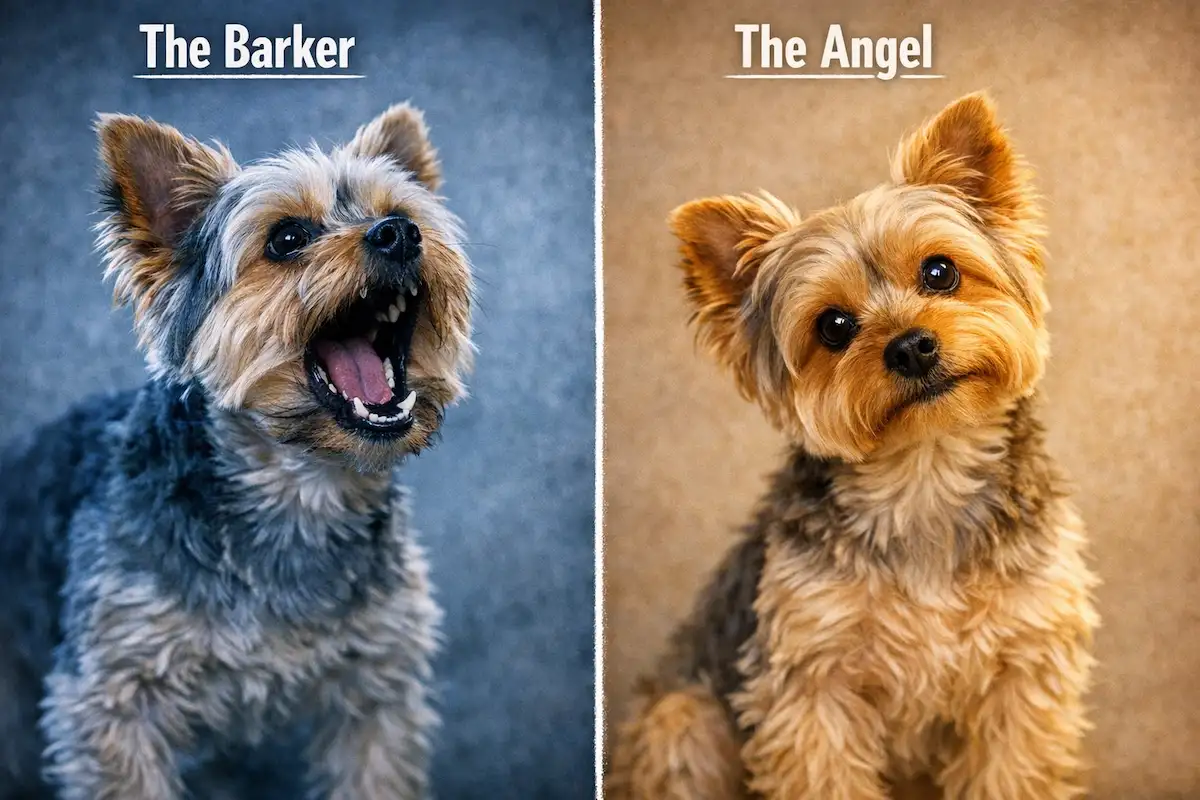
Are Yorkshire Terriers Barkers?
Yes, absolutely. Yorkshire Terriers rank among the most vocal dog breeds. This isn't a flaw - it's by design.
Breed Comparison: Barking Frequency
Why Yorkies Bark More
- • Terrier genetics: Bred to vocally alert to rodents
- • Small size: Compensate with loud voice
- • High energy: Easily stimulated, quick to react
- • Territorial instinct: Protect their space
- • Attachment to owners: Anxious when separated
Historical Context: Why They Were Bred to Bark
In 1850s Yorkshire, textile workers needed dogs that would:
- Alert vocally to rats: Barking announced rodent presence in dark mills
- Work independently: Made decisions without human direction
- Be confident despite small size: Fearlessness required constant vocalization
- Have high prey drive: Excitement = more barking
Modern Yorkies still carry these genes. You cannot "breed out" 170 years of genetic selection for vocalization.
The 7 Reasons Yorkshire Terriers Bark
1. Alert/Watchdog Barking (Most Common)
Triggers:
- • Doorbell or knocking
- • Strangers approaching house
- • Cars pulling into driveway
- • Movement outside windows
- • Delivery trucks
Why it happens: This is their JOB. They're alerting you to potential threats. From their perspective, they're protecting the family.
2. Separation Anxiety Barking
Triggers:
- • When you leave the house
- • When you're in another room
- • At night when separated
- • During owner's daily routine changes
Why it happens: Yorkies form intense bonds with owners. Being alone triggers genuine panic. This is the second most common reason after alert barking.
3. Attention-Seeking/Demand Barking
Triggers:
- • Wants food or treats
- • Wants to play
- • Wants to go outside
- • Wants you to pet them
- • Wants you to look at them
Why it happens: YOU trained this. If barking gets attention (even negative attention like "quiet!"), you've rewarded the behavior.
4. Territorial Barking
- At other dogs during walks
- At people approaching "their" yard
- At pets on TV or through windows
- At visitors entering home
5. Excitement/Play Barking
- During zoomies (random bursts of energy)
- When owners come home
- During play with toys or other dogs
- Before walks or meals
6. Fear Barking
- During thunderstorms or fireworks
- At unfamiliar objects (vacuum, umbrellas)
- At loud noises
- In new environments
7. Boredom/Frustration Barking
- When under-exercised (mental or physical)
- When confined to crate too long
- When routine is disrupted
- When they can see/hear but can't access something interesting
How to Stop Excessive Yorkie Barking
✓ The Golden Rule of Bark Training
Reward quiet behavior. Ignore barking completely.
This is the foundation of all bark training. ANY attention during barking (even saying "no" or "quiet") reinforces the behavior. The dog got you to react. That's what they wanted.
Training Method 1: The "Quiet" Command
Trigger Controlled Barking
Have someone ring doorbell. Let Yorkie bark 3-5 times (this is normal alert behavior). Don't say anything yet.
Wait for Natural Pause
Dogs naturally pause between barks. The INSTANT they stop (even for 1 second), say "Quiet" in calm voice and immediately give high-value treat.
Increase Duration
Next time, wait 2 seconds of quiet before treat. Then 5 seconds. Then 10. Gradually increase until they can stay quiet for 30+ seconds after "Quiet" command.
Practice Daily
10-15 repetitions per day. Takes 2-4 weeks to become reliable. Must be consistent - entire family must follow same rules.
Training Method 2: Desensitization (For Alert Barking)
Reduce reaction to specific triggers:
- Doorbell: Record doorbell sound. Play quietly while giving treats. Gradually increase volume over weeks while rewarding calm behavior
- Strangers: Have friends approach house repeatedly. Reward dog for sitting calmly instead of barking
- Other dogs: Stay far away where dog notices but doesn't bark. Reward. Gradually decrease distance over weeks
Training Method 3: Ignore Attention-Seeking Barks
The Extinction Burst (Warning)
When you first start ignoring attention barks, they will get WORSE before they get better. This is called an "extinction burst." The dog thinks "hmm, this worked before, let me try LOUDER."
If you give in during the extinction burst, you've taught them: "Bark longer and louder to get what you want." Must stay consistent for 1-2 weeks. It will stop.
Training Method 4: Mental Stimulation
Tired dogs bark less. Mental exercise (puzzles, training) tires them more than physical:
- Puzzle toys: Food-dispensing toys provide 15-30 minutes of quiet focus
- Training sessions: 5 minutes of trick training = 30 minutes of fetch for mental tiredness
- Sniff walks: Let them sniff everything on walks (tiring for brain)
- Hide and seek: Hide treats around house for them to find
Training Method 5: Address Separation Anxiety
If barking when alone:
- Start with 30-second absences. Return before barking starts
- Gradually increase to 1 minute, 2 minutes, 5 minutes, 10 minutes, 30 minutes
- Leave high-value chew toy (Kong with peanut butter)
- Don't make departures/arrivals emotional (no "I'm leaving!" or excited greetings)
- Consider calming supplements (melatonin, CBD, or prescription anti-anxiety meds)
What NOT to Do (Common Mistakes)
❌ Never Use Shock/Citronella Bark Collars
These cause fear, anxiety, and can worsen barking long-term. Also cause physical pain and psychological damage. Banned in many countries. Never use on Yorkies.
❌ Don't Yell "Quiet!" or "No!"
To your dog, this sounds like you're barking WITH them. You're joining the chorus, not stopping it. Any verbal response = attention = reward.
❌ Don't Comfort Fear Barking
Petting and saying "it's okay" during fear barking reinforces the fear. Act normal and calm. Reward calm behavior only.
❌ Don't Expect 100% Silence
You own a Yorkshire Terrier. Some barking is genetic and normal. Goal is reducing EXCESSIVE barking, not eliminating it entirely. They will still alert bark occasionally.
❌ Don't Give Up After 3 Days
Bark training takes 2-4 weeks minimum. Behaviors that have been reinforced for years don't stop overnight. Consistency is everything.
Realistic Expectations: What You Can Achieve
What Training CAN Do:
- Reduce barking by 70-80%
- Teach "Quiet" on command (eventually)
- Stop attention-seeking barking completely
- Reduce alert barking duration (3-5 barks instead of 50)
- Manage separation anxiety barking
What Training CANNOT Do:
- Make a Yorkie completely silent
- Eliminate all alert barking (it's genetic)
- Stop instant reaction to doorbell/knocking (takes practice)
- Change breed temperament
Success Story Example:
Before training: Yorkie barks at doorbell for 5+ minutes, barks 50+ times at strangers, barks constantly when alone, barks for attention every 10 minutes.
After 4 weeks consistent training: Barks 3-5 times at doorbell then stops with "Quiet" command. Doesn't bark for attention (learned it doesn't work). Still barks when alone but only for 30 seconds. Barks at strangers but stops when asked.
This is realistic success. Not silent, but manageable.
Common Questions
Do Yorkies bark more than other small breeds?
Yorkies rank among the top 3 most vocal small breeds along with Chihuahuas and Miniature Pinschers. All three were bred for alerting/guarding despite small size. Breeds like Cavalier King Charles Spaniels or Shih Tzus bark significantly less.
At what age do Yorkies calm down and bark less?
Barking frequency may decrease slightly around age 3-4 as they mature, but Yorkies remain vocal their entire lives. Seniors (8+) may bark slightly less due to hearing loss and lower energy, but the instinct never disappears. Training matters more than age.
Can debarking surgery make a Yorkie quiet?
Debarking (devocalization) is a surgical procedure that removes tissue from vocal cords, making barks quieter/hoarse but not silent. It's controversial, banned in many areas, and doesn't address WHY the dog barks (anxiety, boredom, fear). Most vets refuse to perform it. Not recommended - train instead.
Are male or female Yorkies quieter?
No significant difference in barking between sexes. Individual temperament, training, and environment matter far more than whether the dog is male or female. Both sexes bark frequently if genetically predisposed and not trained.
Find Verified Breeders
Our directory features Green Flag breeders who:
- Don't breed anxious or excessively reactive dogs
- Socialize puppies to sounds, people, and experiences
- Teach basic manners before puppies go home
- Provide training guidance for new owners